Founded by Dietrich Mateschitz in 1987, Red Bull was inspired by a Thai energy drink called Krating Daeng. Instead of simply selling a beverage, Red Bull created the energy drink category and built a brand around adventure, performance, and excitement.
Marketing Strategy
Brand Promise: “Red Bull Gives You Wings”
Focused on emotions and aspirations rather than product features.
Used content marketing before it became popular.
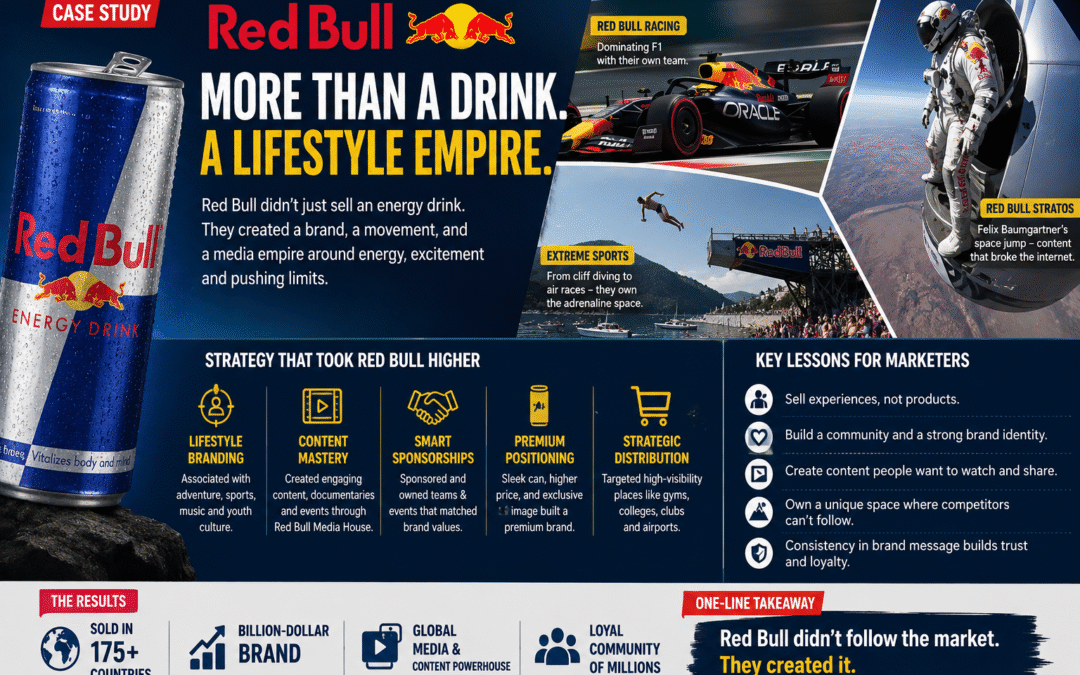
Created videos, documentaries, and events through Red Bull Media House.
Distributed free samples at colleges, clubs, and sports events.
Key Success Factors
Lifestyle Branding
Associated with extreme sports, music, and adventure.
Sold an identity, not just a drink.
Event Sponsorships
Sponsored and owned sports teams such as Red Bull Racing.
Organized global events like cliff diving and air races.
Content Creation
Produced engaging sports and adventure content.
Became a media company as much as a beverage company.
Premium Positioning
Distinctive slim blue-and-silver can.
Higher price created a premium image.
Results
Created a new product category.
Built one of the world’s most recognizable brands.
Expanded beyond beverages into media, sports, and entertainment.
Key Lessons for Marketers
✅ Sell experiences, not products. ✅ Build a community around your brand. ✅ Create content people want to consume. ✅ Differentiate by owning a unique market space. ✅ Consistency strengthens brand identity.
Discussion Questions
How did Red Bull create a new product category?
Why is lifestyle branding important for Red Bull?
What role does content marketing play in its success?
How can other brands apply Red Bull’s strategy?
Takeaway: Red Bull transformed from an energy drink into a global lifestyle and media brand by connecting its product with adventure, excitement, and aspiration.
Red Bull’s greatest achievement was not creating an energy drink—it was creating a movement around energy, performance, and adventure. The product became the entry point; the brand experience became the real value proposition.
In marketing terms: People rarely buy products. They buy the person they want to become. Red Bull understood this better than almost any brand in the world.
Interesting case study.Red Bull’s marketing strategy is highly commendable. By linking its brand with adventure, excitement, and aspiration, Red Bull successfully evolved from an energy drink into a globally recognized lifestyle and media brand.
This is an apt. example of 3E Marketing – EXPERIENTIAL, ENGAGING & EMOTIVE. Consumers always connect to any product/brand Emotively and not just what the product/brand portrays. It was an old school marketing thought to convey benefits over features. The key for success always has been how brands evolve to communicate Emotion thru’ what they have to offer.
A well structured case study that highlights the power of strategic brand building. Red Bull’s success demonstrates that sustainable competitive advantage comes from creating a strong brand ecosystem rather than focusing solely on product features. By combining lifestyle branding, content creation, and experiential marketing, Red Bull successfully transformed itself from a beverage company into a global media and entertainment powerhouse. An excellent example of how marketing can create long-term brand equity and customer loyalty.
Insightful analysis. Red Bull’s journey shows that the most successful brands are those that create a meaningful connection with their audience beyond the product itself. Their ability to combine storytelling, content, and experiential marketing into a consistent brand identity is a masterclass in modern marketing. A great reminder that strong brands are built through experiences, not just transactions.


very nic blog
Excellent case study.
Amazing content!
Very interesting case study and more thought provoking and mind tickling questions .
Excellent work for professionals graduating students of B Schools
Excellent case study
Key Marketing Insight
Red Bull’s greatest achievement was not creating an energy drink—it was creating a movement around energy, performance, and adventure. The product became the entry point; the brand experience became the real value proposition.
In marketing terms: People rarely buy products. They buy the person they want to become. Red Bull understood this better than almost any brand in the world.
It explains how marketing strategies and consumer behavior contributed to the company’s success.”
Insightful and interesting article.
Amazing
Nice article
Excellent article.
So interesting
Pretty Insightful
Red Bull’s biggest achievement wasn’t creating an energy drink – it was creating a lifestyle people wanted to be part of.
Interesting case study.Red Bull’s marketing strategy is highly commendable. By linking its brand with adventure, excitement, and aspiration, Red Bull successfully evolved from an energy drink into a globally recognized lifestyle and media brand.
This is an apt. example of 3E Marketing – EXPERIENTIAL, ENGAGING & EMOTIVE. Consumers always connect to any product/brand Emotively and not just what the product/brand portrays. It was an old school marketing thought to convey benefits over features. The key for success always has been how brands evolve to communicate Emotion thru’ what they have to offer.
A well structured case study that highlights the power of strategic brand building. Red Bull’s success demonstrates that sustainable competitive advantage comes from creating a strong brand ecosystem rather than focusing solely on product features. By combining lifestyle branding, content creation, and experiential marketing, Red Bull successfully transformed itself from a beverage company into a global media and entertainment powerhouse. An excellent example of how marketing can create long-term brand equity and customer loyalty.
Insightful analysis. Red Bull’s journey shows that the most successful brands are those that create a meaningful connection with their audience beyond the product itself. Their ability to combine storytelling, content, and experiential marketing into a consistent brand identity is a masterclass in modern marketing. A great reminder that strong brands are built through experiences, not just transactions.