
Introduction
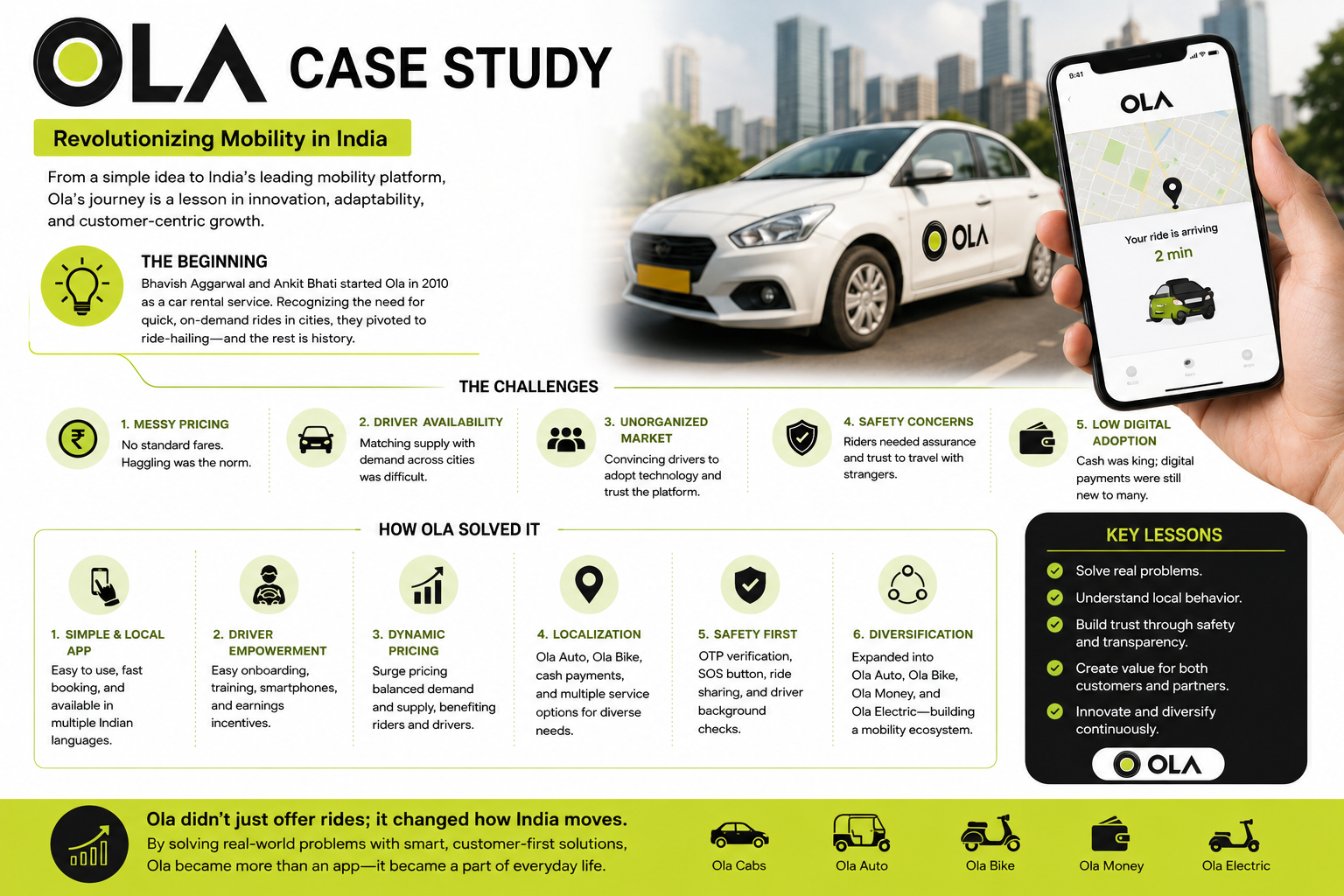
Before ride-hailing apps, commuting in India often meant negotiating fares, waiting for transport, and dealing with uncertainty. Founded in 2010 by Bhavish Aggarwal and Ankit Bhati, Ola transformed urban mobility by offering convenient, app-based transportation tailored to Indian consumers.
The Beginning
The idea for Ola emerged when Bhavish Aggarwal experienced difficulties booking a cab during a trip. Initially launched as a car rental service, the company soon recognized a larger opportunity: providing on-demand city transportation through a mobile app.
As smartphone adoption and mobile internet usage grew, Ola expanded rapidly across major Indian cities, making ride booking simpler and more reliable.
Key Challenges
1. Unpredictable Pricing
Traditional taxi fares often varied widely, creating distrust among customers.
2. Driver Availability
Balancing rider demand with driver supply across busy cities was a constant challenge.
3. Unorganized Market
Most drivers had limited exposure to technology and digital platforms.
4. Safety Concerns
Passengers needed assurance regarding security, especially during late-night travel.
5. Low Digital Payment Adoption
Many customers preferred cash, making digital transactions difficult initially.
Ola’s Solutions
1. User-Friendly App
A simple interface and support for multiple Indian languages made the service accessible to a wide audience.
2. Driver Empowerment
Ola provided training, smartphone support, and income incentives to attract drivers.
3. Dynamic Pricing
Surge pricing encouraged drivers to operate during peak-demand periods, improving availability.
4. Localization Strategy
Ola adapted its services to different markets through:
- Ola Auto
- Ola Bike
- Ola Prime
- Cash and digital payment options
5. Safety Features
To build trust, Ola introduced:
- OTP-based trip verification
- SOS emergency button
- Ride-sharing location features
- Driver background verification
6. Service Diversification
Beyond cabs, Ola expanded into:
- Ola Auto
- Ola Bike
- Ola Money
- Ola Electric
This helped the company evolve from a ride-hailing platform into a broader mobility ecosystem.
Key Marketing & Business Lessons
- Solve a genuine customer problem.
- Adapt products to local consumer behavior.
- Build trust through safety and transparency.
- Create value for both customers and service providers.
- Continuously innovate and diversify.
Conclusion
Ola’s success demonstrates how understanding local consumer needs and addressing real-world challenges can create a disruptive business model. By combining technology, localization, and customer-centric innovation, Ola reshaped transportation in India and became one of the country’s most recognized mobility brands.

very nicely framed case study . Must read by every marketing student